

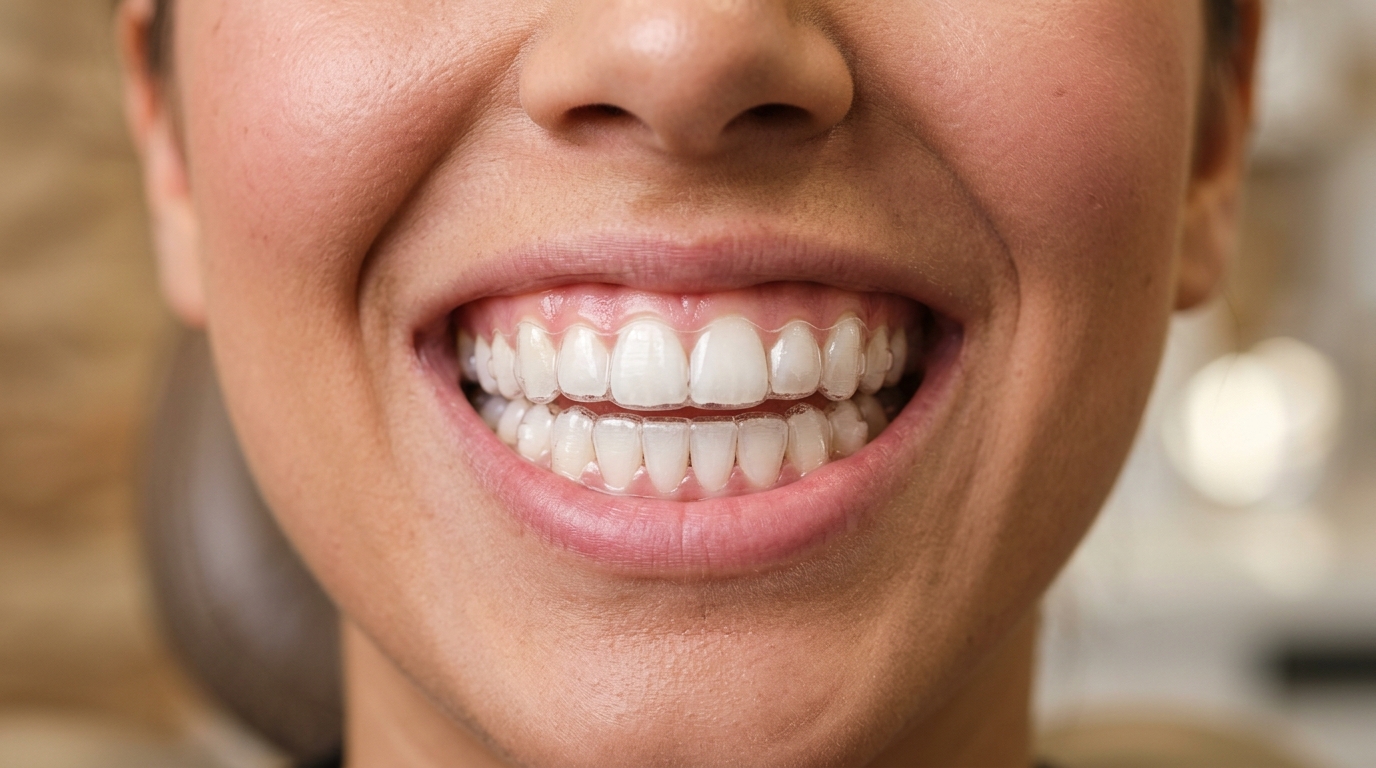
Biomechanics: How Aligners and Fixed Braces Move Teeth
Both orthodontic braces and clear invisible aligners rely on continuous physiological force to remodel alveolar bone around tooth roots. Fixed braces use bonded metal or ceramic brackets connected by an archwire, applying directional tensile and compressive forces.
Clear aligners use custom thermoformed medical-grade polyurethane trays changed every 7 to 14 days. Each sequential tray introduces 0.2 to 0.25 mm of controlled tooth movement.
Direct Comparison: Aesthetics, Hygiene, and Compliance
Aesthetics: Clear aligners are virtually invisible at social distances, making them popular among working adults. Ceramic braces also offer discrete bracket profiles.
Oral Hygiene: Aligners are removable, enabling unrestricted flossing and brushing. Braces require specialized interdental brushes to avoid plaque stagnation and white spot lesions.
Compliance Requirement: Aligners must be worn for 20 to 22 hours daily. Patients prone to forgetting their trays will experience tracking delays.
Which Option Fits Your Malocclusion?
Mild to moderate crowding, spacing, and anterior rotations respond exceptionally well to clear aligners. Complex skeletal crossbites, severe deep bites, or high canine impactions may require fixed orthodontic appliances or hybrid mechanics.