

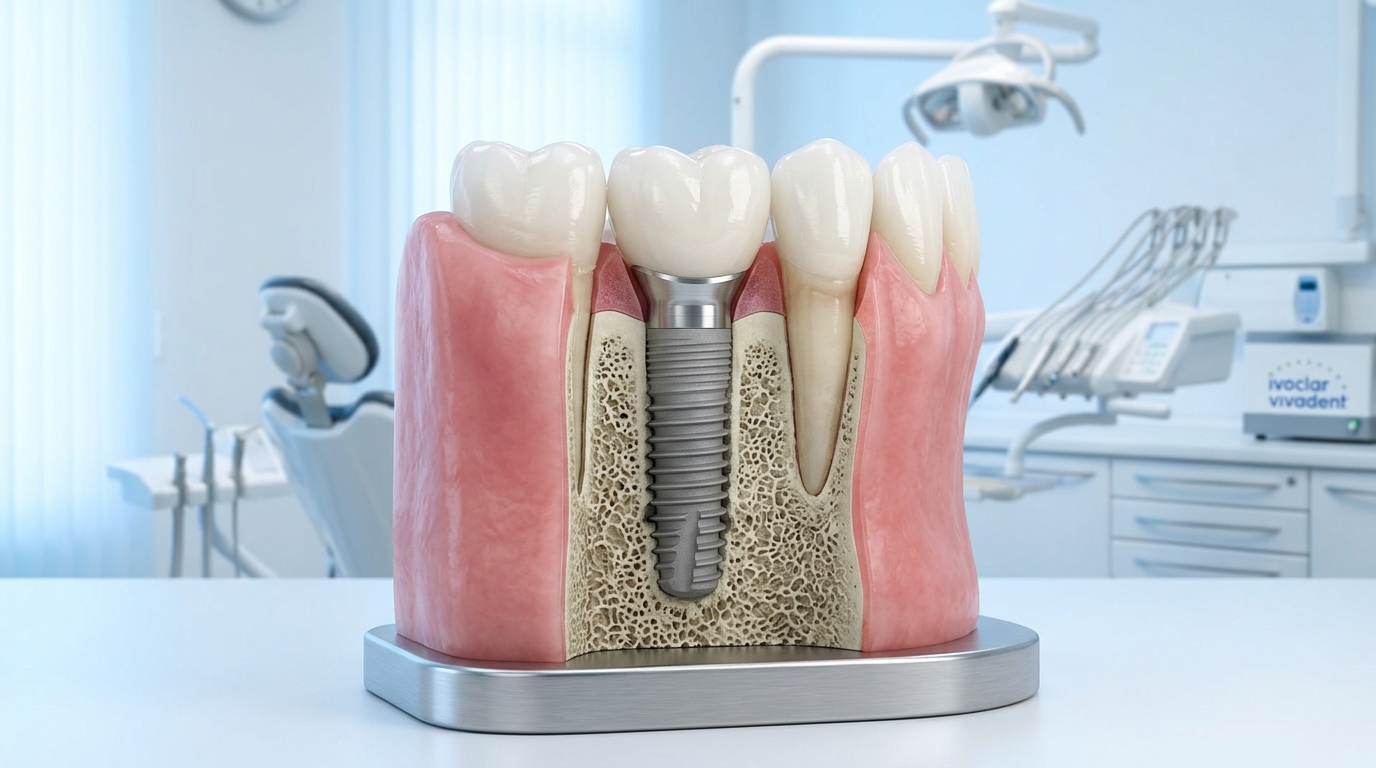
What Are Dental Implants and How Do They Work?
A dental implant is a biocompatible grade-4 titanium or zirconia screw placed surgically into the jawbone to replace missing tooth roots. Unlike bridges, implants do not require grinding down adjacent healthy teeth, and unlike removable dentures, they eliminate bone resorption through biological functional loading.
The Multi-Stage Clinical Implant Process
Phase 1: Diagnostic 3D CBCT imaging to evaluate bone volume, sinus proximity, and inferior alveolar nerve positioning.
Phase 2: Surgical fixture placement under local anesthesia, with bone grafting if horizontal or vertical height is deficient.
Phase 3: Digital intraoral scanning and custom zirconia abutment and crown attachment following healing.
The Biology of Osseointegration
Osseointegration is the structural and functional connection between living bone tissue and the surface of a load-bearing implant. It takes 8 to 12 weeks in the lower jaw (mandible) and 12 to 16 weeks in the upper jaw (maxilla).