

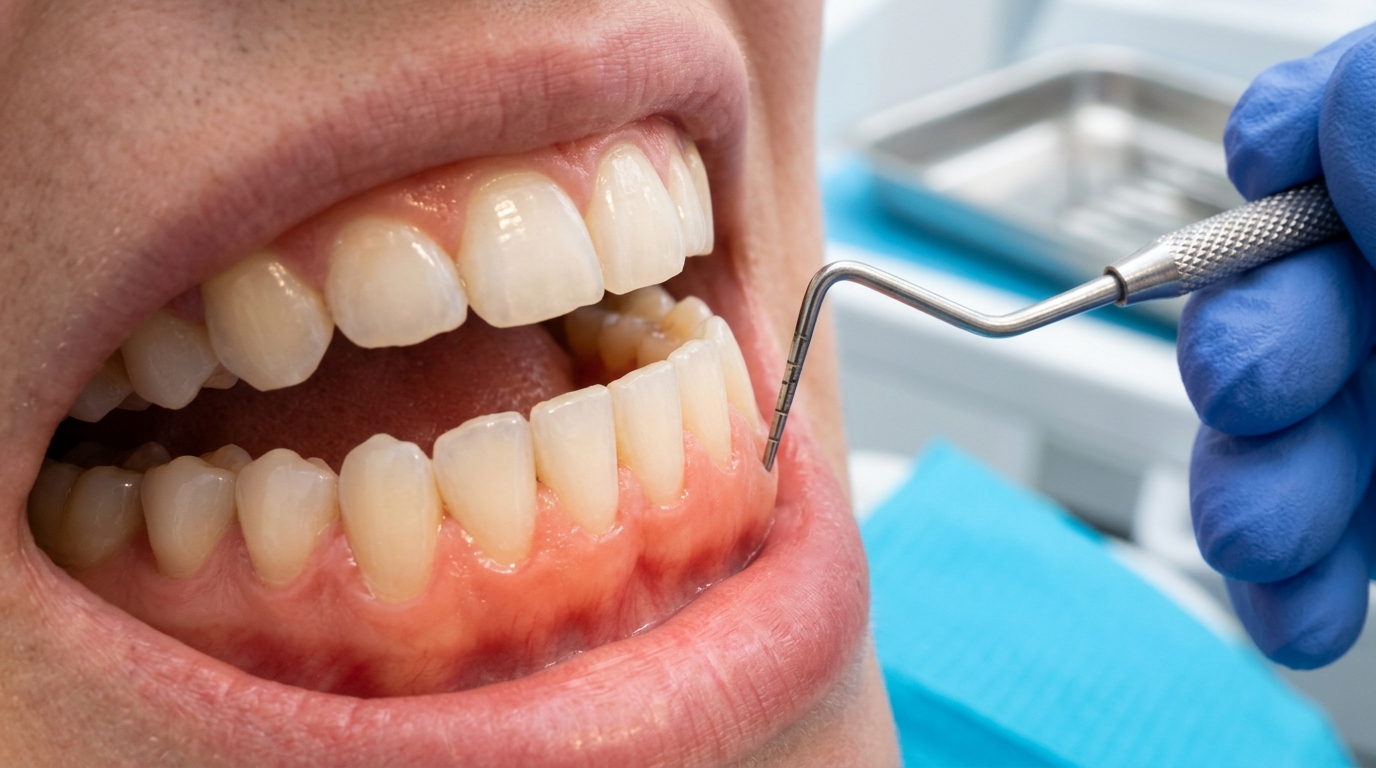
1. Early Warning Signs of Gum Disease You Shouldn't Ignore
Periodontal disease develops silently, often without causing pain until significant destruction of the supporting alveolar bone has already taken place. Recognizing early clinical indicators is crucial to prevent tooth mobility and irreversible tissue attachment loss.
Bleeding Gums During Brushing or Flossing
Healthy gums never bleed during routine brushing or flossing. Bleeding on probing (BOP) is the hallmark sign of active subgingival microvascular inflammation caused by pathogenic bacterial biofilm accumulated at the gingival margin.
Persistent Halitosis (Chronic Bad Breath)
Chronic foul breath or a lingering unpleasant taste in the mouth is typically caused by volatile sulfur compounds (VSCs) produced by anaerobic bacteria residing in deep subgingival periodontal pockets.
Gum Recession & Exposed Tooth Roots
As periodontal pockets deepen, the marginal gingiva detaches and pulls back from the enamel crown, making teeth appear visibly longer. Exposed root surfaces lack enamel protection, leading to sharp temperature sensitivity.
2. Understanding the Progression: Gingivitis vs Periodontitis
Understanding the clinical boundary between superficial gingivitis and destructive periodontitis determines whether damage can be fully reversed or requires lifelong periodontal maintenance.
Gingivitis: 100% Reversible Inflammation
Gingivitis is confined strictly to the soft epithelial gingival cuff. There is zero detachment of connective tissue fibers and zero loss of alveolar bone height. With professional ultrasonic plaque debridement and meticulous daily oral hygiene, gingival tissues return to complete health within 10 to 14 days.
Periodontitis: Irreversible Bone & Attachment Loss
When plaque calcifies into subgingival calculus, anaerobic bacterial colonies trigger a chronic host immune response. The body releases matrix metalloproteinases and inflammatory cytokines that actively resorb the surrounding jawbone and periodontal ligament fibers.
3. Clinical Treatment Options: Non-Surgical to Advanced Therapy
Treatment is customized based on comprehensive periodontal charting, pocket depth measurements (measured in millimeters), and radiographic bone loss assessments.
Scaling & Root Planing (SRP / Deep Cleaning)
The cornerstone of non-surgical periodontal therapy. Specialized ultrasonic tips and micro-curettes systematically remove stubborn subgingival calculus deposits from root surfaces, creating a biologically clean foundation for tissue re-attachment.
Laser-Assisted Periodontal Pocket Disinfection
Modern dental lasers (such as soft-tissue diode lasers) selectively target and vaporize dark-pigmented periodontal pathogens inside deep pockets without incising or traumatizing healthy gingival tissue, accelerating healing times.
Bone Grafting & Guided Tissue Regeneration (GTR)
In advanced cases with angular vertical bone defects, periodontists place biocompatible bone graft materials and collagen barrier membranes to stimulate the body to regenerate lost alveolar bone around stable teeth.
4. Prevention Protocol and Periodontal Maintenance Recalls
Patients with a history of periodontitis require clinical maintenance intervals every 3 to 4 months rather than the standard annual cleaning. This prevents matured bacterial colonies from reorganizing into destructive subgingival biofilm.